OPEN TELESCOPE NETWORK

RedbankIII

红岸三号

Do not answer. We listen.

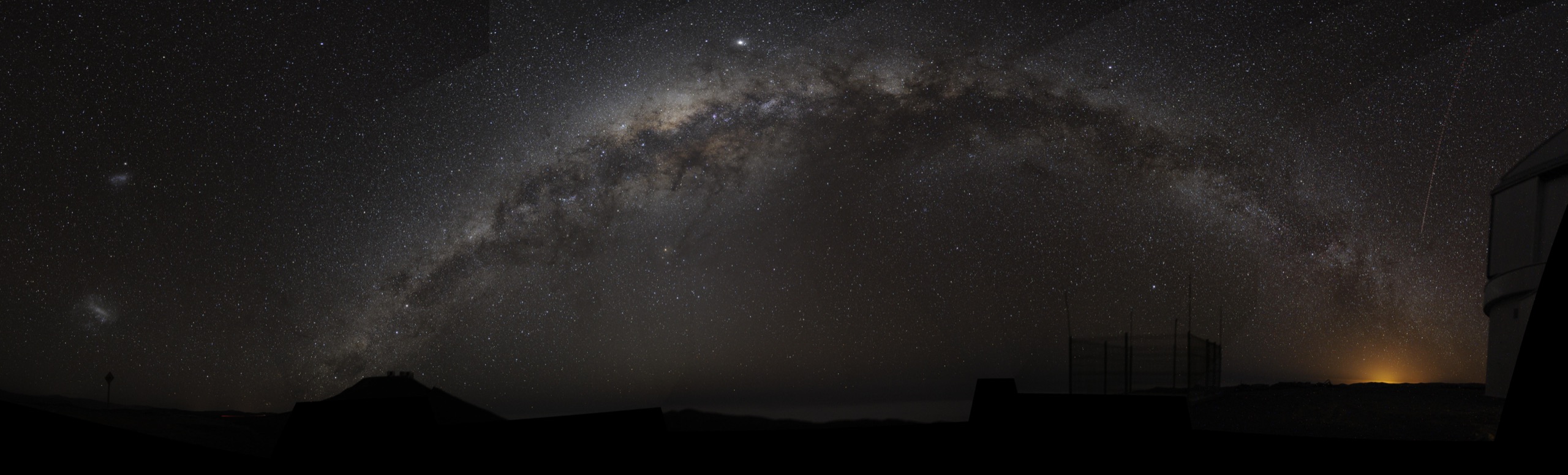
The brightest stars in the sky have no one watching them — current surveys saturate near magnitude 10. Redbank III is an open telescope network: low-cost nodes on balconies, rooftops and dark-sky sites, scheduled as one instrument, watching variables, novae and GRB afterglows at mag 6–16. The same hardware also shoots the deep sky.

¥1,700+
Cost per node · a balcony is a station
mag 6–16
Science window · bright-end time domain
~1.5%
Instantaneous coverage of all major surveys
100%
Open source · staged release
Scroll down ↓
MISSION · 使命

Hand the unwatched sky to an open network

In 2013, Roberto Abraham (University of Toronto) and Pieter van Dokkum (Yale) started the Dragonfly Telephoto Array over a beer bet — eight Canon 400mm f/2.8L professional lenses networked into an array that imaged ultra-diffuse galaxies previously visible only to Hubble and Keck.

Dragonfly proved something important: cheap lenses plus array synthesis can do serious science. But at $11,500 per lens, with closed code and an unpublished design, ordinary people cannot replicate it.

Meanwhile the other end of the sky sits empty: no instrument on Earth continuously monitors stars brighter than magnitude ~10 — every modern survey saturates at the bright end (ASAS-SN saturates near mag 10). When Betelgeuse dimmed in 2019, professional instruments overexposed; the key photometry came from amateurs.

Redbank III joins these two facts — open-design observing nodes built from consumer sensors and second-hand lenses for under ¥2,000, deployed on balconies, rooftops and dark-sky sites, scheduled by software into one networked instrument: watching the mag 6–16 time-domain sky (variables, novae, GRB afterglows) as its main mission, while the same hardware, stacked, also reaches Dragonfly-class deep sky. Anyone, anywhere, can afford to build one and plug it in.

"The democratization of astronomy is not building more big telescopes,
but making small telescopes an order of magnitude more numerous."
— Redbank III Design Manifesto
THE OPPORTUNITY · 机会

Professional astronomy wins depth.
Amateur astronomy wins width.

Depth (dark matter, gravitational waves, exoplanet atmospheres) belongs to Hubble, JWST and China's Space Station Survey Telescope — out of reach for amateurs. But width is different: the sky is vast, the phenomena are endless, and every major survey instrument on Earth combined stares at only 1.5% of the sky at any moment.

~1.5%
Instantaneous global survey coverage
Rubin + ZTF + PS1 + ATLAS + ASAS-SN combined ≈ 600 deg² of 41,253 deg²
~40%
Discovery completeness for ≥140m NEOs
NASA CNEOS official figure; Congress mandates 90%, LSST reaches only 62%
0
Amateur groups in the top-10 transient discoverers
TNS lists 200k transients; the top 10 are all professional surveys
0.3%
Earth surface covered by fireball networks
FRIPON's 150 cameras — already among the world's largest networks

Amateur victories land precisely in the professional blind spots.In 2016, Argentinian amateur Víctor Buso captured the shock breakout of SN 2016gkg from his backyard — the first hours of a supernova's light — and co-authored a Nature paper. In 2023, Koichi Itagaki discovered SN 2023ixf at mag 14.9, two full days before ZTF's own data. Mass amateur occultation campaigns (Pallas 1983, 130 stations; MU69 2017, pathfinder for New Horizons) remain unmatched by any single observatory.

Yet existing amateur networks haven't claimed this prize.The AAVSO holds 84.8 million photometric measurements — submitted by hand, not a survey. Unistellar sold 25,000 smart telescopes; five years of networked science yielded ~10 refereed papers, all closed-source. Seestar automated the single telescope, but the data stays trapped on each phone — automation of one ≠ science of many. Closed hardware, private data, no autonomous scheduling, no cross-node triggering — these are the structural bottlenecks.

The counter-example proves it works: the Global Meteor Network grew from 450 Raspberry Pi cameras to 1,000+ across 40+ countries, fully open source, publishing 220,000+ meteor orbits within 24 hours. It lacks only one thing — deeper sensors and larger aperture. That is exactly what Redbank III adds.

"Amateurs don't lack passion or equipment —
they lack the protocol that turns
ten thousand small telescopes
into one survey machine."
— Redbank III Networking Manifesto
FIRST PRINCIPLES · 第一性原理

Choosing a sensor is not choosing specs —
it's choosing which supply chain you stand on

Light-collecting power is set by one physical quantity — étendue (A×Ω, aperture area × solid-angle field). It barely cares about lens finesse, but it scales brutally with sensor area × lens speed. And sensor and lens prices are not set by the astronomy market — they are set by the mass-market supply chain each product rides on.

Consumer smart telescopes

Riding the security-camera market

Sony STARVIS surveillance sensors
IMX462 / IMX585 / IMX678 — 1/2.8" to 1/1.2" formats

Hundreds of millions of security cameras ship every year; STARVIS pushed read noise to 0.6e⁻ at a unit price of a few dollars. But surveillance lenses only cover small sensors — so the entire industry is locked under 1/1.2": small sensor → small image circle → small optics → $400–1,000 retail → hundreds of live-stacked frames, "trading time for aperture".

Seestar S50 (IMX462)≈ 0.55 mm²·sr
Celestron Origin (6" RASA)≈ 6.0 mm²·sr

No coincidence — supply-chain determinism: the surveillance market has no 1" sensor, so smart telescopes can't afford one.

Redbank III

Riding the smartphone market

Sony IMX989 one-inch imaging flagship
128 mm² of silicon — surplus from the phone camera arms race

Phone makers pushed 1" sensors to 50MP / 1.6µm and bundled SoC, ISP, storage, display and battery into a single device. One generation later, that whole "compute platform + big sensor" package sells used for ¥1,200 (~$210). Add a ¥500 Samyang 135mm f/2.0 lens — ¥2,000 per unit. No competitor can offer this at this price.

Redbank III unit (IMX989 + 135mm f/2.0)≈ 22.6–24.1 mm²·sr
vs Origin / Seestar S504× / 40×

Same money, 4–40× the light grasp — not because our optics are better, but because our supply chain is richer.

This is why no smart-telescope maker uses a big sensor — they don't want to, they can't: it doesn't exist in their supply chain.From Seestar ($499) to Celestron Origin II ($4,299), everything converges on STARVIS 1/2.8"–1/1.2" sensors. No one crosses the line. Redbank III's ¥1,200 used Xiaomi 12S Ultra is the only "one-inch sensor + full compute platform" combination in this market — and it exists precisely because phones iterate an order of magnitude faster than astronomy.

SCIENCE TARGETS · 科学目标

The sky we keep watch over

The bright-end time domain is a structural blind spot of modern surveys — to see deep, they all saturate around mag 10. The four real events below are the science this network exists to catch. Every image is a real observation, individually credited.

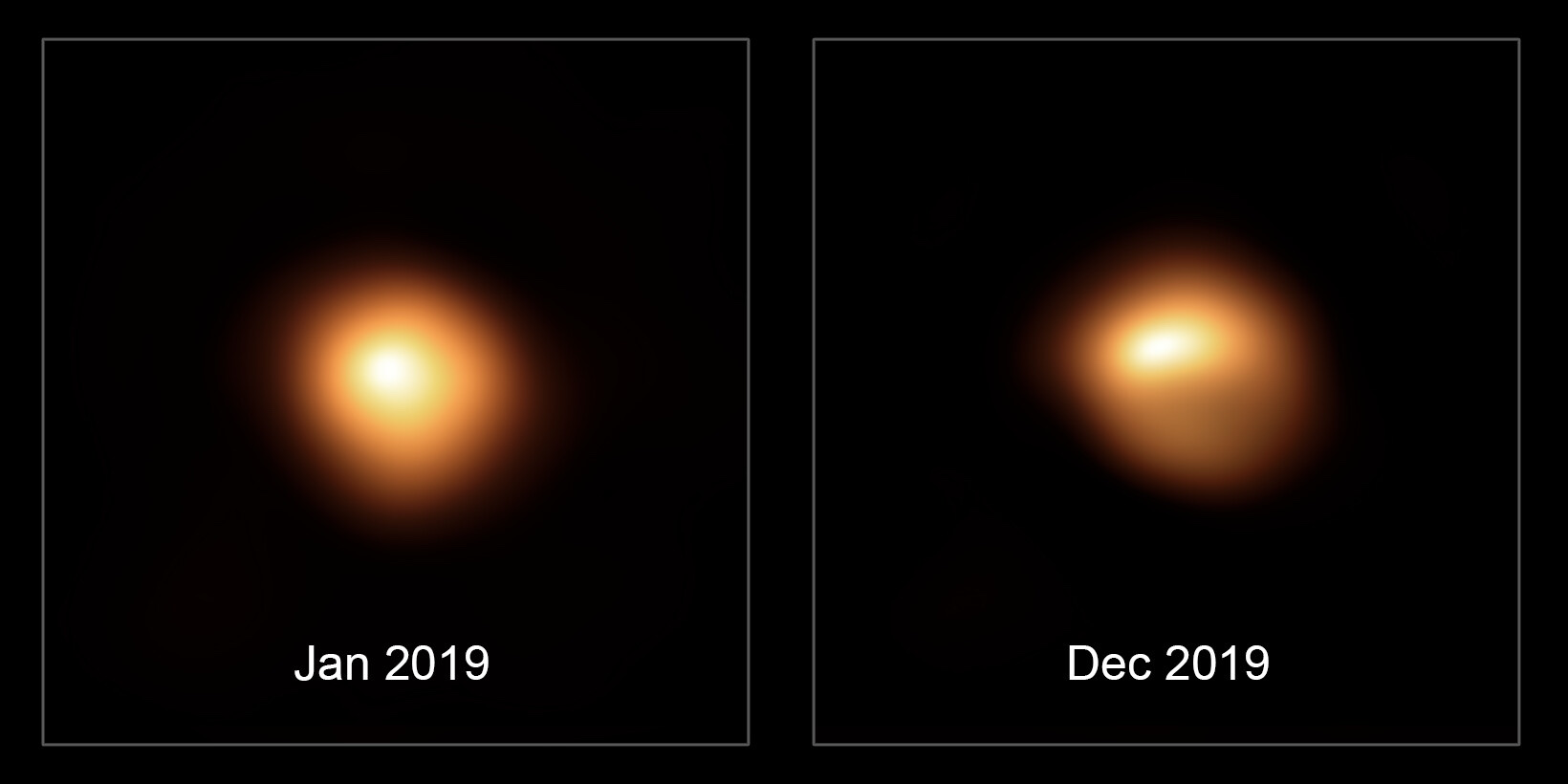
Betelgeuse before and after the Great Dimming (VLT/SPHERE)

The Great Dimming of Betelgeuse · 2019–20

One of the brightest stars in the sky faded by a full magnitude in four months. Professional surveys saturated; key photometry came from amateurs — exactly the job of a bright-end staring station.

ESO/M. Montargès et al. (VLT/SPHERE) · CC BY 4.0
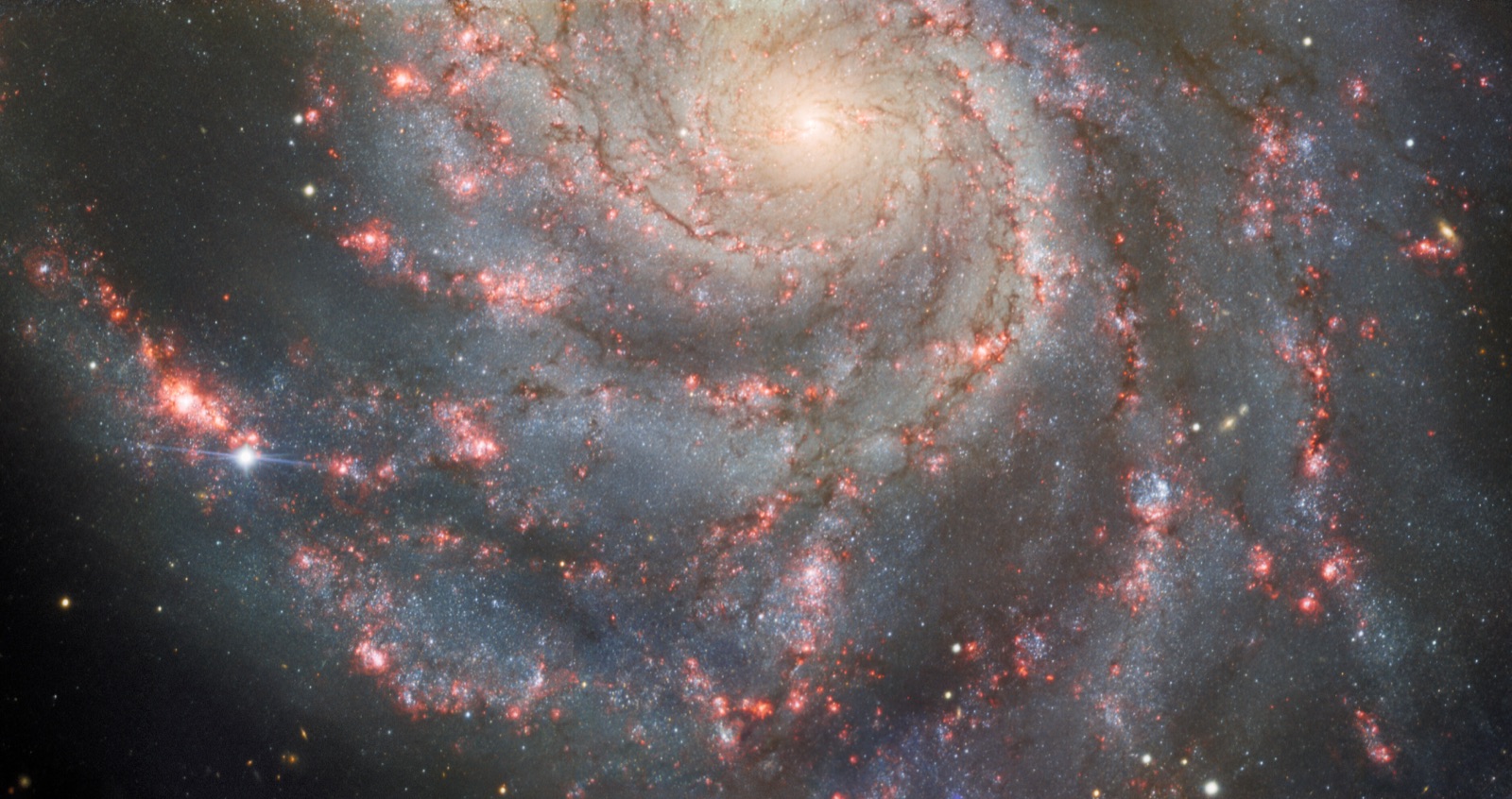
SN 2023ixf in the Pinwheel Galaxy (Gemini North)

Supernova SN 2023ixf · 2023

Koichi Itagaki caught it at mag 14.9, two full days before ZTF's archival detections — at the bright end, discovery still belongs to whoever keeps watching.

International Gemini Observatory/NOIRLab/NSF/AURA/J. Miller et al. · CC BY 4.0
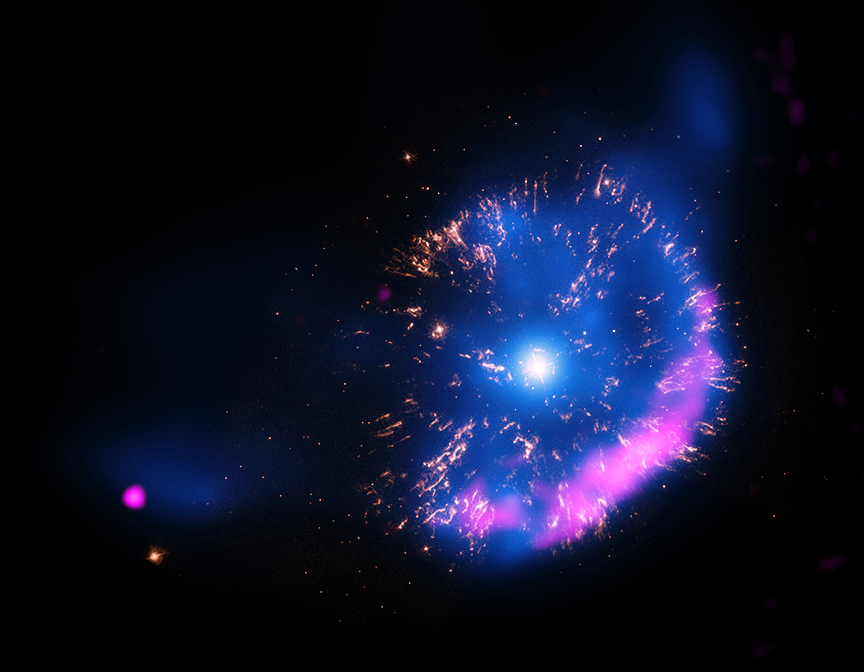
Nova remnant GK Persei (Chandra/HST/VLA composite)

Nova remnant GK Persei

Novae don't make appointments — rise to peak takes days. A network's value is that some node is always awake; a staring station's ring buffer even keeps the frames from before the outburst.

X-ray: NASA/CXC/RIKEN/D. Takei et al.; Optical: NASA/STScI; Radio: NRAO/VLA
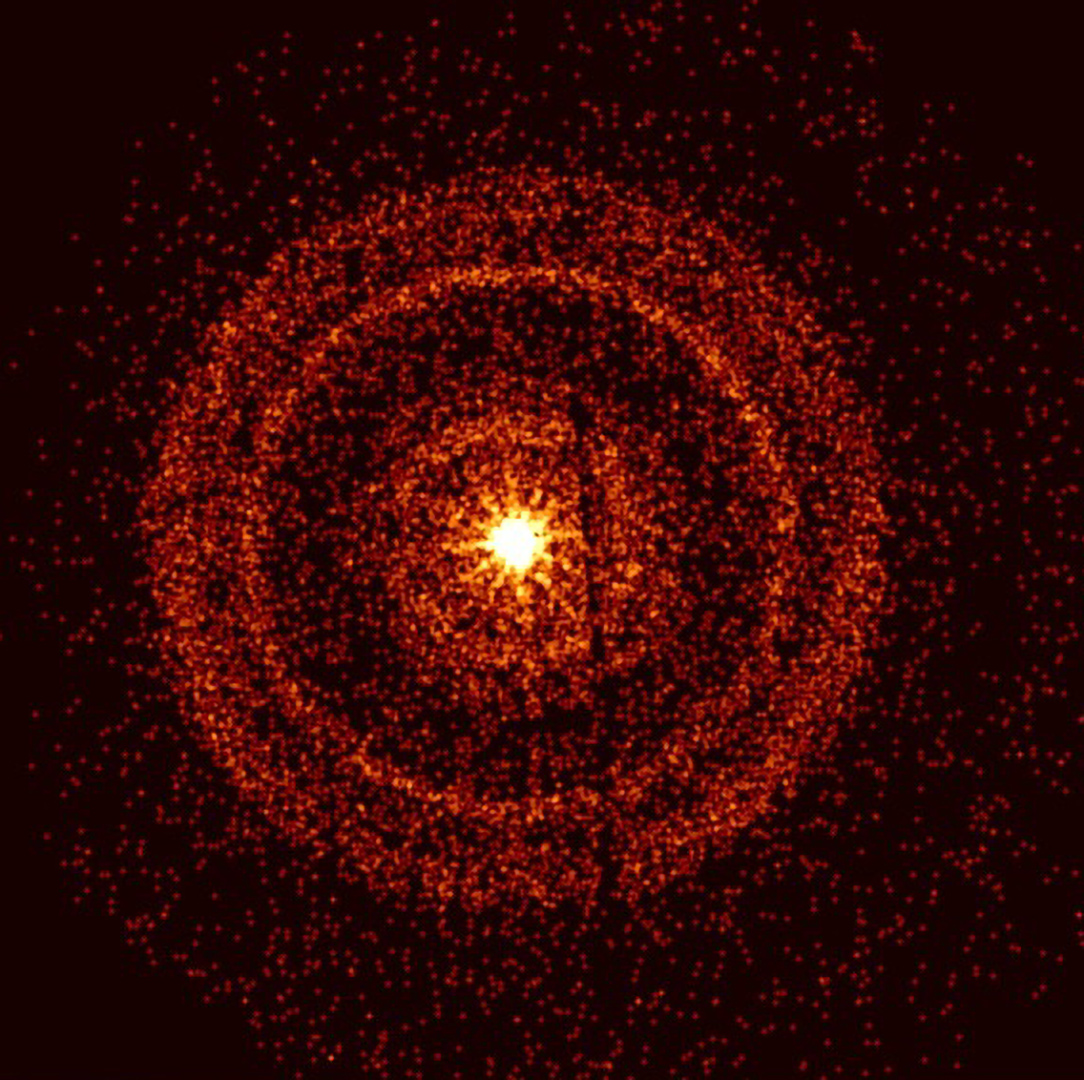
X-ray dust rings around GRB 221009A (Swift/XRT)

GRB 221009A · brightest of all time

X-rays scattering off galactic dust into concentric rings. Afterglows fade by the minute — the response stations' design target: exposing within 15–45 seconds of an alert.

NASA/Swift/A. Beardmore (University of Leicester)
SIMULATION · 仿真

The scheduler already runs —
watch its simulation replays

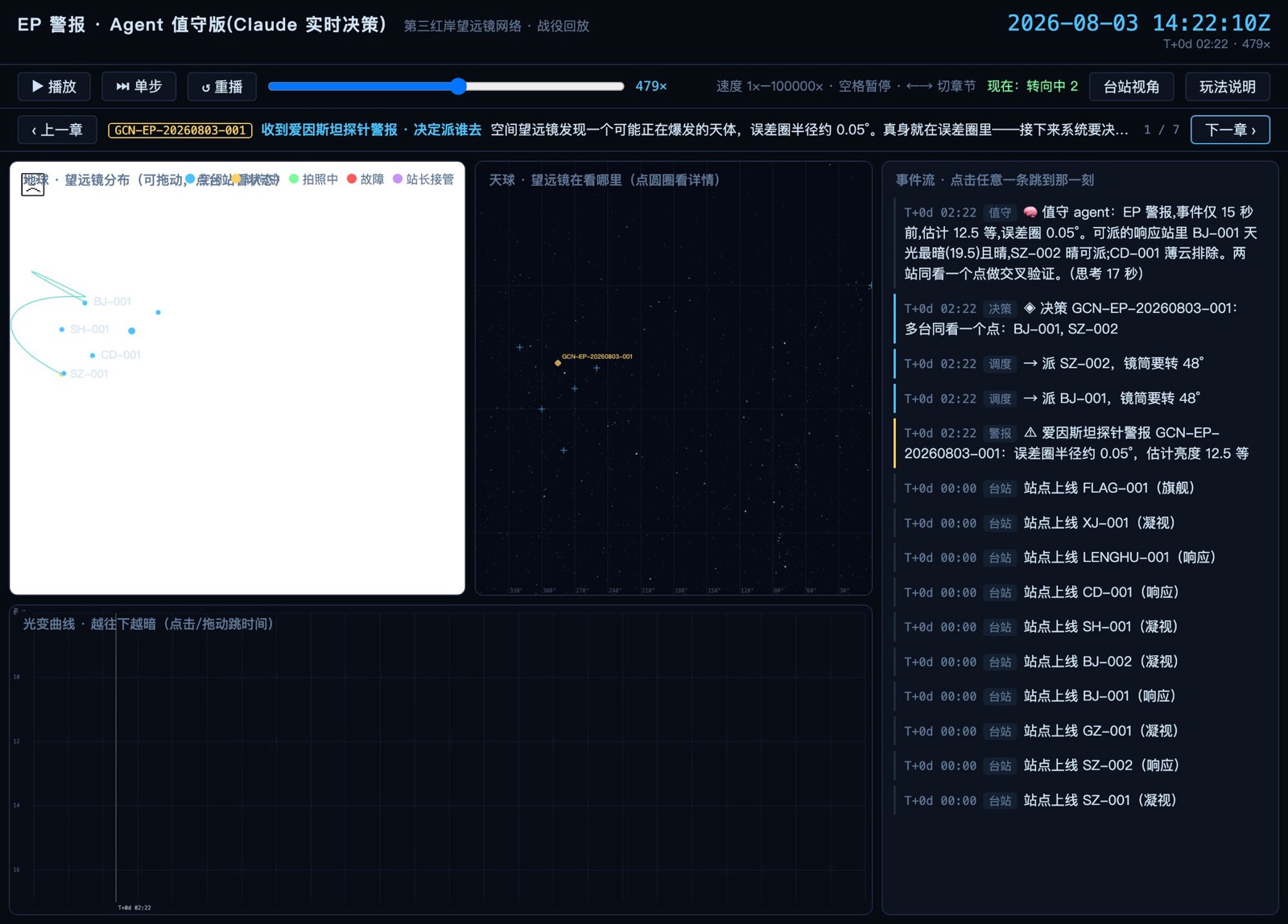
The network is not built yet, but its software went first: sky, alert streams, stations, scheduling, agents and faults are modeled as adeterministic simulation — same (seed, campaign) reruns byte-identical. The replay below is not an animation: it is the event stream computed second-by-second by the simulation kernel — an Einstein Probe alert arrives, stations are dispatched, mounts slew, exposures fire, scores are archived. Every event is clickable.

EP alert campaign simulation replay: station globe, sky plot, event stream, light curve

Four panels: globe (station status) · sky plot (where telescopes point) · event stream (every system step) · light curve (target brightness). In the agent-on-duty variant, dispatch decisions are made live by Claude — reasoning visible, thinking time scored.Open all replays ↗

3D DESIGN · 三维设计

3D design · parametric CAD

Real printable geometry (exact CSG via manifold3d, every part watertight and single-piece, 18.0mm flange verified at build time) — not concept art: these renders come straight from the STLs generated by the cad/ directory in the repo.

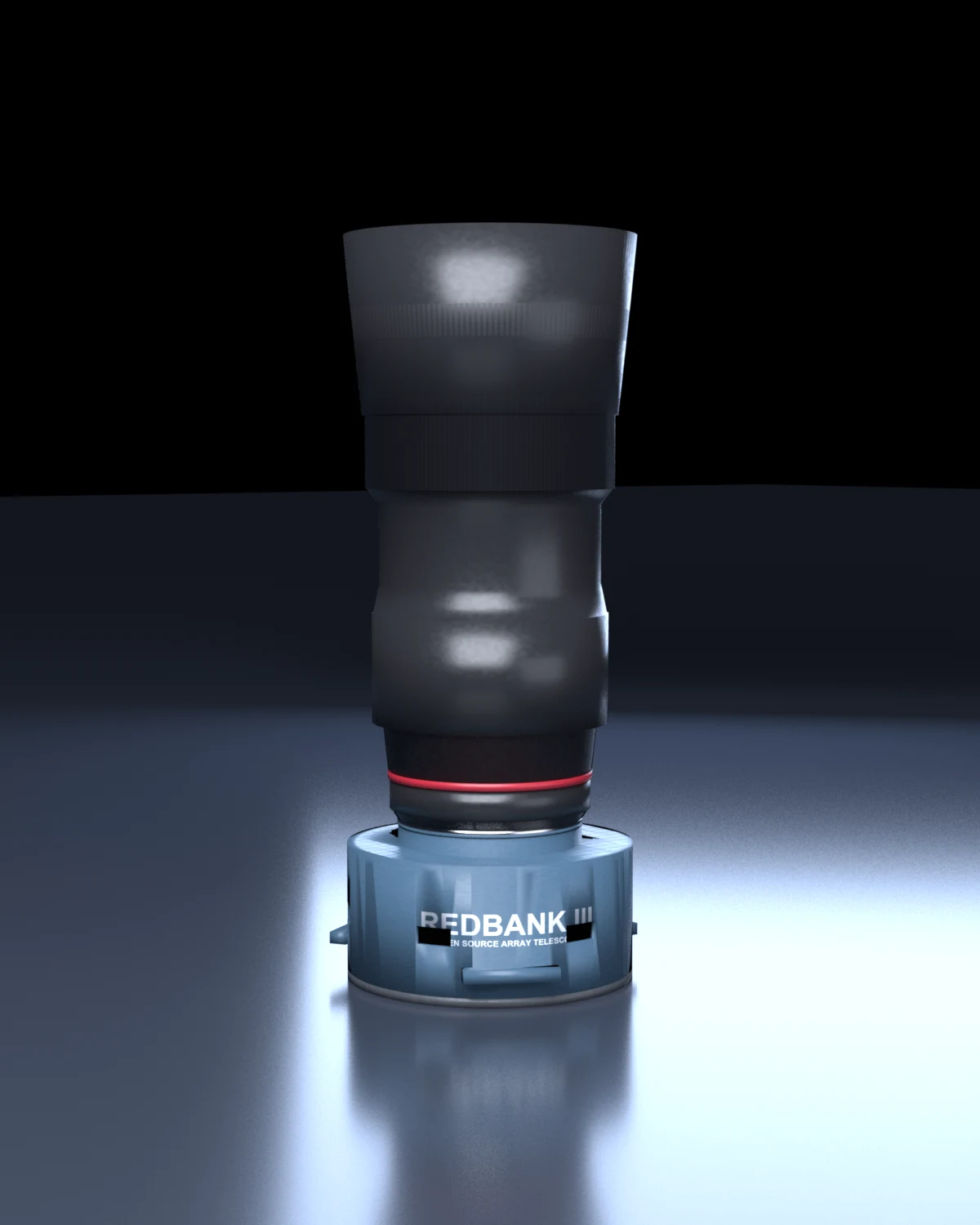
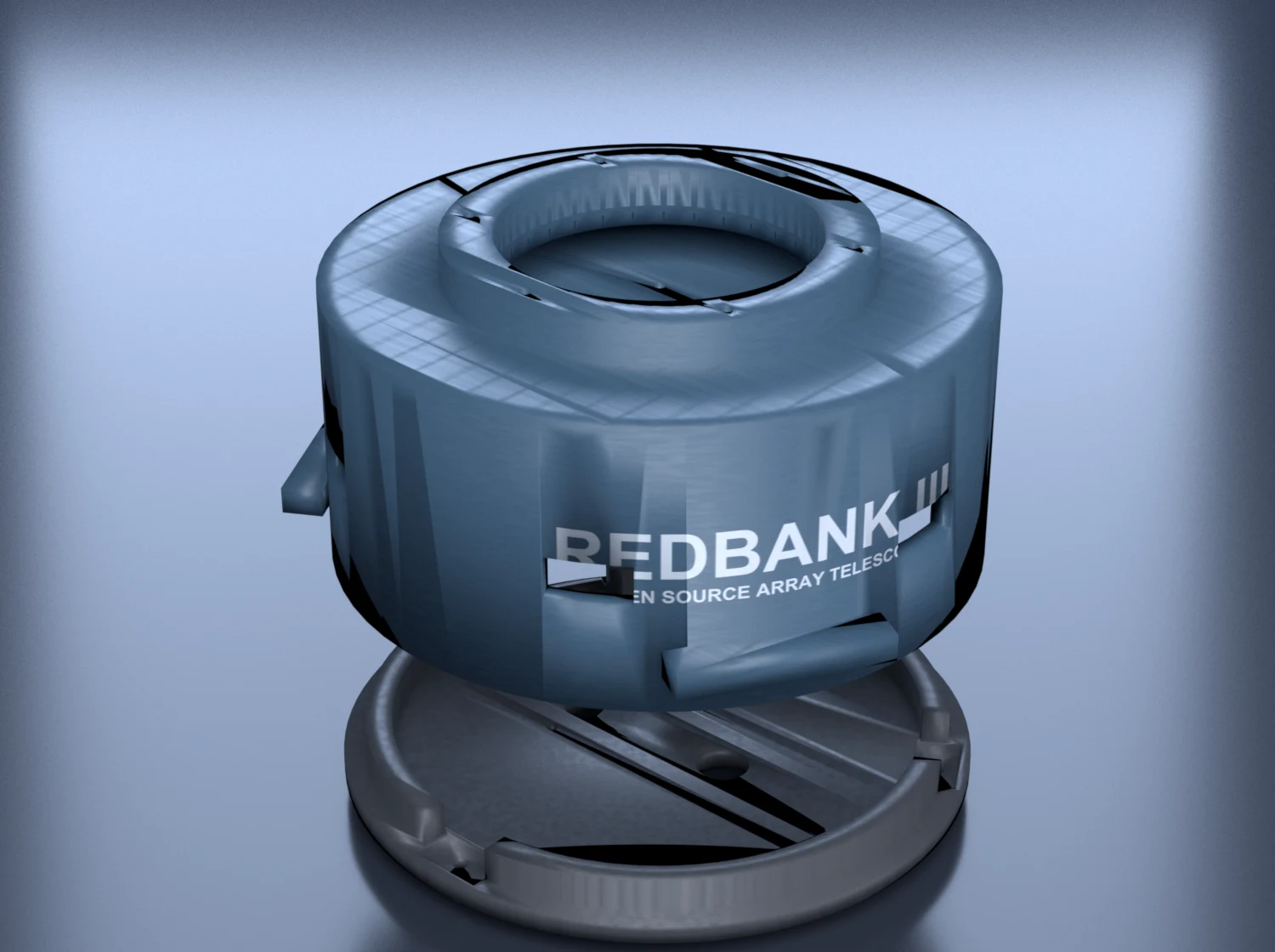
Redbank III unit with Samyang 135mm f/2.0

Unit · Samyang 135/2

A Ø95×42mm puck — the unit hosts only the sensor and one small board, everything else is deleted. The lens (Ø96 with hood) is fatter than the body; the rear cap carries DC power in and a USB-C ADB port.

Path-traced from the printable STLs · cad/
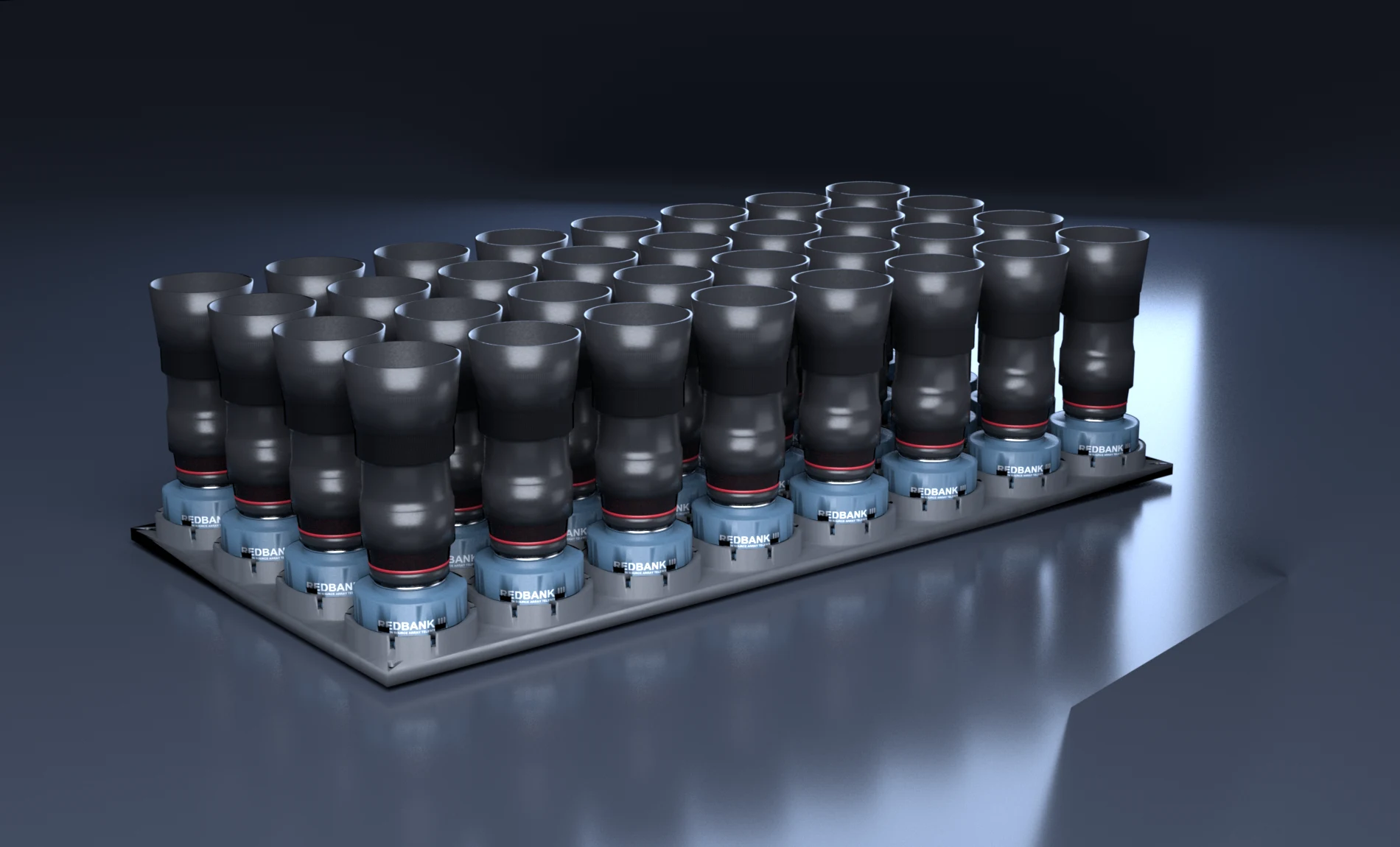
Redbank III 4x8 array with 32 Samyang lenses

4×8 array · 32 lenses

32 units socketed on one carrier plate — each socket has a cable notch and USB/DC route, all fed by a centralised DC battery. 382mm equivalent aperture.

Path-traced from the printable STLs · cad/
Redbank III unit exploded view

Exploded · two parts

The whole unit is two printed parts: the drum (E-mount collar, sensor clamp seat and board posts all integral) and the rear cap. The separate carrier is gone — the seat lives in the front bulkhead.

Path-traced from the printable STLs · cad/
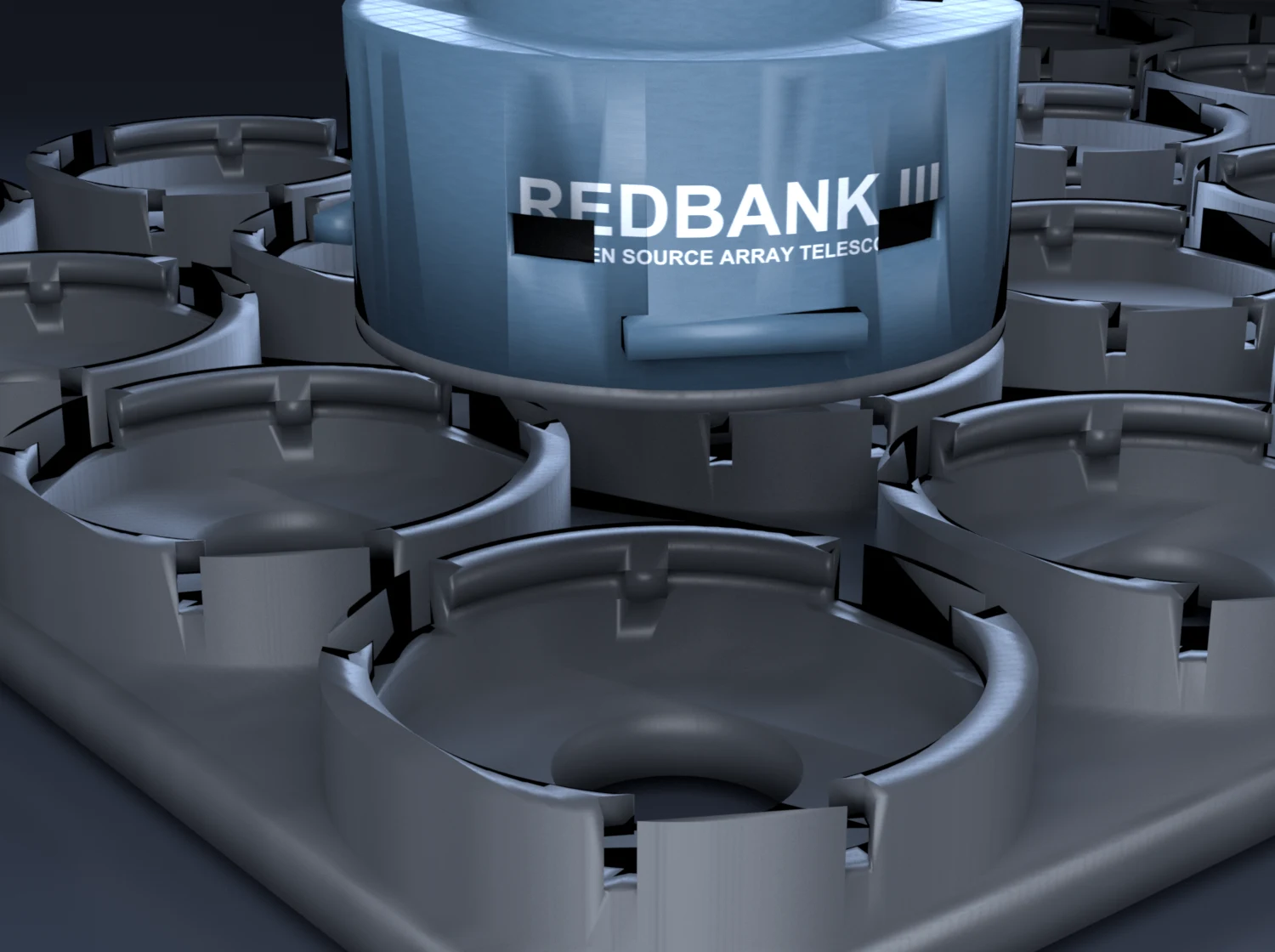
Redbank III bayonet socket — drop in and twist to lock

Bayonet socket · the array hooks

The biggest structure is the array interface: three lugs on the drum tail drop into the socket and a 35° twist locks them under the ring — tool-free hot-swap of any unit. Cabling exits through a Ø40 window under each socket.

Path-traced from the printable STLs · cad/

Live 3D · WASM interactive viewer

The real URDF model running in your browser (makepad WASM build): drag to orbit, wheel to zoom, ←/→ select a joint, ↑/↓ turn the bayonet locks, A animates, R resets. ~10MB download.

Open in a new tab ↗

Not loaded by default to save data — press the button to fetch it.

DESIGN PHILOSOPHY · 设计哲学

Three non-negotiable principles

I

Fully open source

Hardware CERN-OHL-W-2.0, software Apache-2.0, docs CC BY-SA 4.0. No black boxes, nothing held back. OSHWA certification is a goal.

II

Array first

Not "one good telescope" but "N cheap telescopes synthesized." Quantity over quality — the stacking algorithm is the real innovation.

III

Consumer components

No scientific CCDs, no professional lenses. IMX modules, second-hand phones, Huaqiangbei supply chain — cost at 1/100.

DESIGN · 技术方案

Design

Extract phone PCB + sensor module, place in 3D-printed tube telescope. Best value, leverage the entire software stack.

Three engineering questions for phone repurposing

The expert's core objection: a phone camera is a glued sealed module (lens + sensor + bracket bonded with UV adhesive for alignment precision and waterproofing). This determines the feasibility of three approaches.

① Can you stack a telescope lens on top of the existing phone lens?

❌ Not viable for deep-sky. This is the "afocal / eyepiece projection" approach — treat the phone lens as an eye and point a telescope into it. Problems: the phone lens entrance pupil is only 1–2mm, so of an 80mm telescope only a tiny central bundle enters — the aperture advantage is lost, plus heavy vignetting and added aberration from the extra glass. Fine for the Moon/bright planets, wrong for faint deep-sky.

② Remove the stock lens and couple the bare sensor directly to the telescope focal plane (prime focus)?

✅ The correct approach — the only way to use the telescope's full aperture. But it needs a precision custom adapter: back-focus within ±0.1mm, sensor tilt <0.05°, optical-axis centering to microns. Removing the glued lens risks scratching the IR-cut filter / leaving adhesive / dust ingress, and you lose the phone's AF — focus and tilt become mechanical micro-adjustments (screws + shims). A 32-unit array demands batch consistency, which is Plan B's hidden cost.

③ Can a rooted phone exceed the sensor's exposure-time limit?

✅ Partly, but there are hard ceilings. The Camera2 API (no root needed) already gives true RAW + manual long exposure; root's real value is disabling ISP noise-reduction/sharpening, forcing manual gain, fixing black level — clean raw frames. But two physical limits: (a) the sensor exposure register often caps around ~30s; (b) uncooled thermal noise swamps faint signal at 30–60s. So the phone path must use "short frames, many stacked" — stacking dozens/hundreds of frames equals a very long exposure.

BOM · 物料清单

Phone Conversion Plan — Bill of Materials

ComponentModel / sourceQtyUnitSubtotal
Donor phone boardXiaomi 11 Ultra (cracked screen/back, intact mainboard + camera)1$50$50
Conversion laborHuaqiangbei conversion technician (lens removal + cleaning + assembly)1$3$3
Astrograph lensSamyang 135mm f/2.0 (Canon EF)1$500$500
Adapter ringCanon EF → phone sensor (custom CNC)1$25$25
EnclosureCNC aluminium enclosure (heatsinked)1$30$30
FocuserM42 focuser (standard astro part)1$10$10
MiscSeals, IR-cut filter, screws, etc.1$15$15
Incoming QC + burn-inPower-on test + lightbox MTF test1$5$5
Total per unit¥1,500 (~$210)
4-unit array¥6,000 (~$840)
16-unit array¥24,000 (~$3,350)

✅ Pros: 61% cheaper; SoC + ISP + display + battery + storage all come free; a ready-made Android ecosystem
⚠️ Caveats: irreversible modification; depends on the Huaqiangbei supply chain; the adapter ring must be machined per phone model (standardising on the Xiaomi 12S Ultra is recommended)

ARRAY · 阵列

Quantity over quality

First, the network's shape: the primary form is distributed — many independent nodes on balconies, rooftops and dark-sky sites, scheduled as one instrument. The concentrated 8×4 array in this section is the flagship reference design — 32 nodes on one carrier, synthesizing a large equivalent aperture; it is also the configuration benchmarked against Dragonfly. The sky-noise-suppression principle behind stacking was validated in the Dragonfly papers.

Array sizeEquivalent apertureEquivalent refractorPlan A costPlan B costWhat you can image
1 unit67.5mm2.7"$1,600¥1,500Moon, Jupiter, Saturn, M42, M31
4 units135mm5.3"$6,400¥6,000+ faint galaxies, stellar halos
8 units191mm7.5"$12,800¥12,000+ ultra-diffuse galaxies, intergalactic medium
16 units270mm10.6"$25,600¥24,000+ Dragonfly 8-lens-class science
32 units382mm15"$51,200¥48,000+ cosmic web, circumgalactic medium

vs Dragonfly

Dragonfly (8 lenses)
$150,000
404mm equivalent aperture · closed source
Redbank III Plan B (32 lenses)
¥48,000 (~$6,700)
382mm Equivalent aperture · Fully open source

A fraction of the cost, comparable aperture, fully open source.

DEEP SKY · 深空

The same hardware, pointed up, is a deep-sky camera

Time-domain monitoring is the network's science mission; deep-sky imaging is the other face of the same hardware — and every node owner's most direct reward: a single node captures a satisfying M42, and 4–8 stacked nodes reach galactic disks and stellar halos. Extreme low-surface-brightness targets like the Horsehead or the Pillars of Creation belong to a 16+ unit array — a long-term goal we are not promising today.

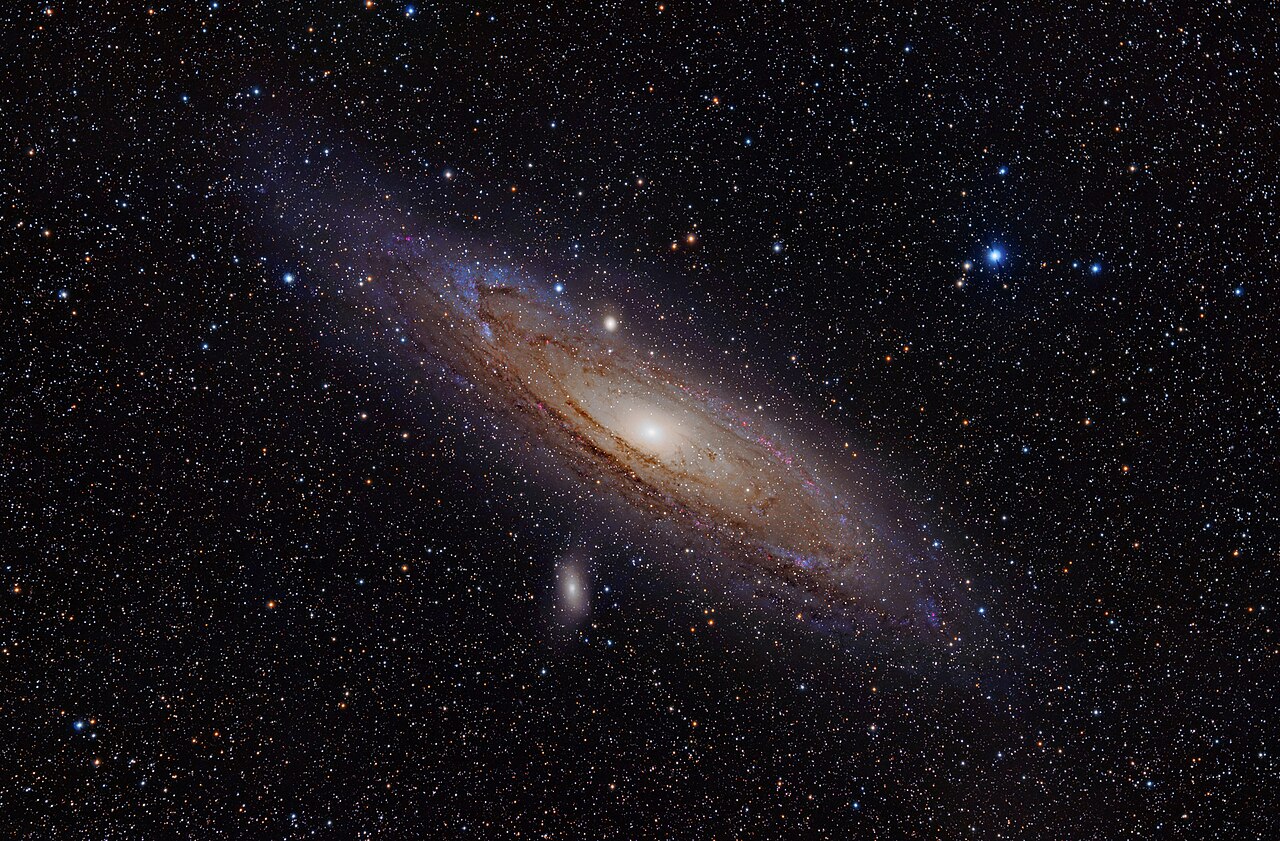
Andromeda Galaxy (Hubble)

Andromeda Galaxy M31

4 stacked nodes resolve the disk and faint stellar halo — Dragonfly-validated low-surface-brightness science, replayed the open-source way.

NASA/ESA Hubble Space Telescope · reference target, not imaged by this network
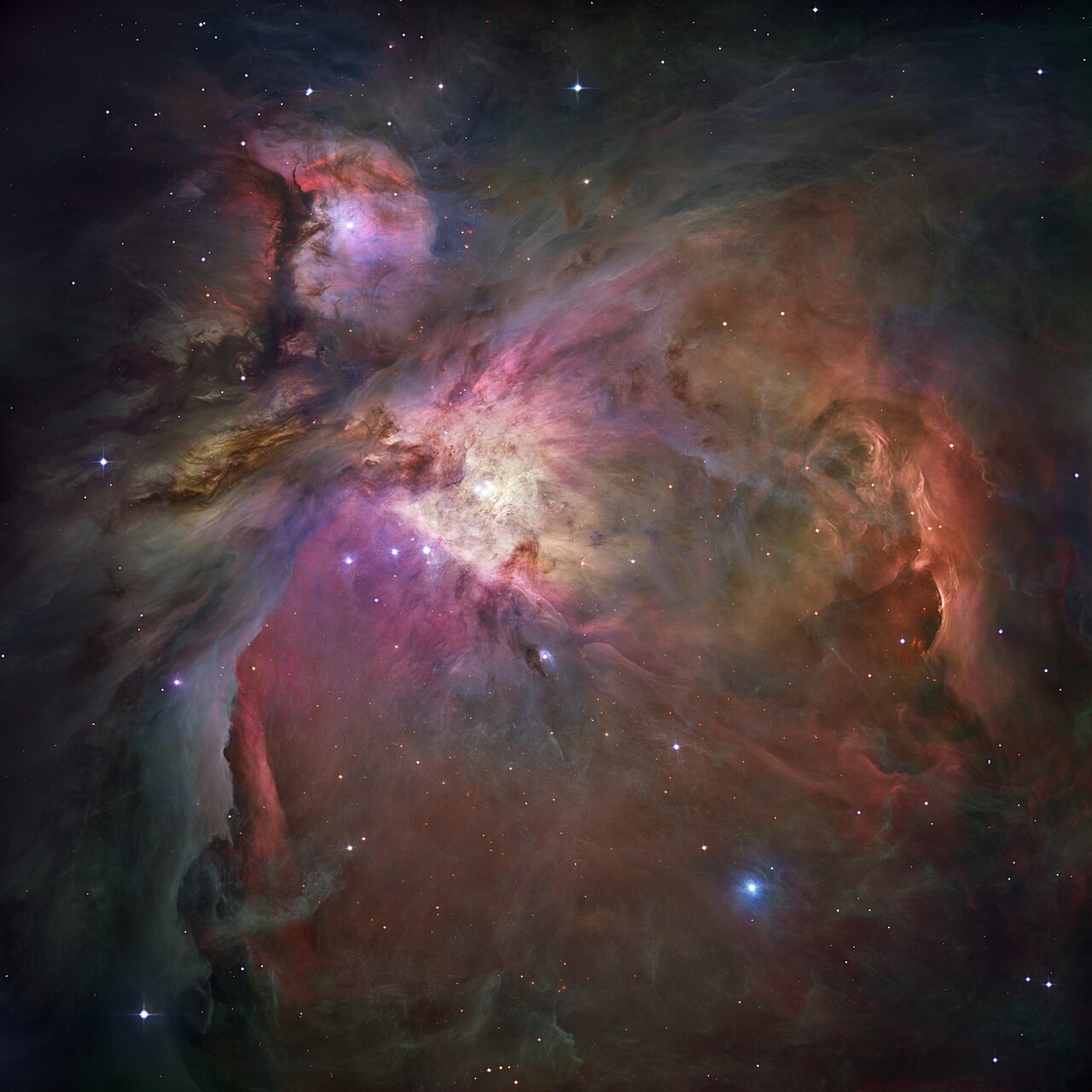
Orion Nebula (Hubble)

Orion Nebula M42

A single node captures a satisfying M42; stacking reveals the faint outer shells — a new node owner's first deep-sky photo.

NASA/ESA Hubble Space Telescope · reference target, not imaged by this network
SOFTWARE · Software

The stacking algorithm is the real innovation

Capture

Multi-lane MIPI synchronised exposure (Plan A) / Wi-Fi triggered sync (Plan B). NTP time sync < 1 ms. RAW/DNG output.

Alignment

Inter-frame celestial alignment (astroalign / OpenCV feature matching). Sub-pixel registration. Auto boresight calibration.

Stacking

Sigma-clipped stacking, sky-background modeling and subtraction, dark/flat correction. Dragonfly's core science algorithm — open-sourced to its limit.

Control

Mount control (INDI / LX200), automated survey, target scheduling. Native Octos AgentOS integration — telescope as agent, auto-responding to GRB/SN alerts.

Staggered Exposure · Dual-Mode Scheduling

Phone sensors cap single-frame exposure at 30s (Android HAL hard limit). The fix: 32 nodes in 4 groups of 8, phase-shifted by 7.5s — at any instant ~30/32 nodes are collecting photons, pushing array-level time coverage to ~100%. No systematic blind window for transients, occultations or GRB afterglows. Survey mode staggers (coverage); on an alert, the whole array snaps to synchronized cycles (time resolution). This is exactly how Evryscope and ASAS-SN run professional surveys.

STORY · 故事

From Redbank to Redbank III

1969

Red Bank · where the name comes from

In Liu Cixin's The Three-Body Problem, the Red Bank base (红岸基地) is the secret radio project on Radar Peak — humanity's first transmission to the stars, and where Ye Wenjie received the warning: "Do not answer. Do not answer. Do not answer." We borrow the name but do the opposite — instead of shouting into the deep, we listen quietly with a thousand open-source eyes. Redbank III is Red Bank's open-source sequel.

2013

Dragonfly is born

Abraham and van Dokkum started Dragonfly on a bar bet — eight Canon 400mm f/2.8L lenses, $11,500 a unit. It reached ultra-faint galaxies and reshaped low-surface-brightness astronomy. But the code was never opened and the design was never published.

2021

MOTHRA launches

The Dragonfly team won FRO funding from XTX Markets founder Alex Gerko and began MOTHRA — a super-array of 1,140 lenses. Tens of millions of dollars, still closed. Big science keeps drifting further out of reach.

2024

Open robotics paradigm matures

reBot-DevArm, Reachy Mini, and Open Duck Mini proved the mature open-hardware model: CERN-OHL + Apache-2.0 dual licensing, public BOM, Huaqiangbei supply chain, Discord community, tiered SKUs. That paradigm transfers to astronomy.

2026

Redbank III launches

We combine Dragonfly's science, the engineering playbook of open-source robotics, and the Huaqiangbei supply chain. Plan A (IMX modules) takes the standardised route; Plan B (repurposed phones) takes the cost-optimised one. Fully open source — anyone can build one.

Future

A global distributed network

1,000 Redbank III nodes worldwide — survey coverage beyond any single professional instrument. The precedent is the Global Meteor Network: Raspberry Pi cameras grew to 1,000+ across 40+ countries in five years, data public within 24 hours. Redbank III extends that model deeper into the sky — every node speaks FITS / AAVSO / MPC standards from birth, centrally scheduled, with GRB/SN alerts triggering cross-node follow-up.
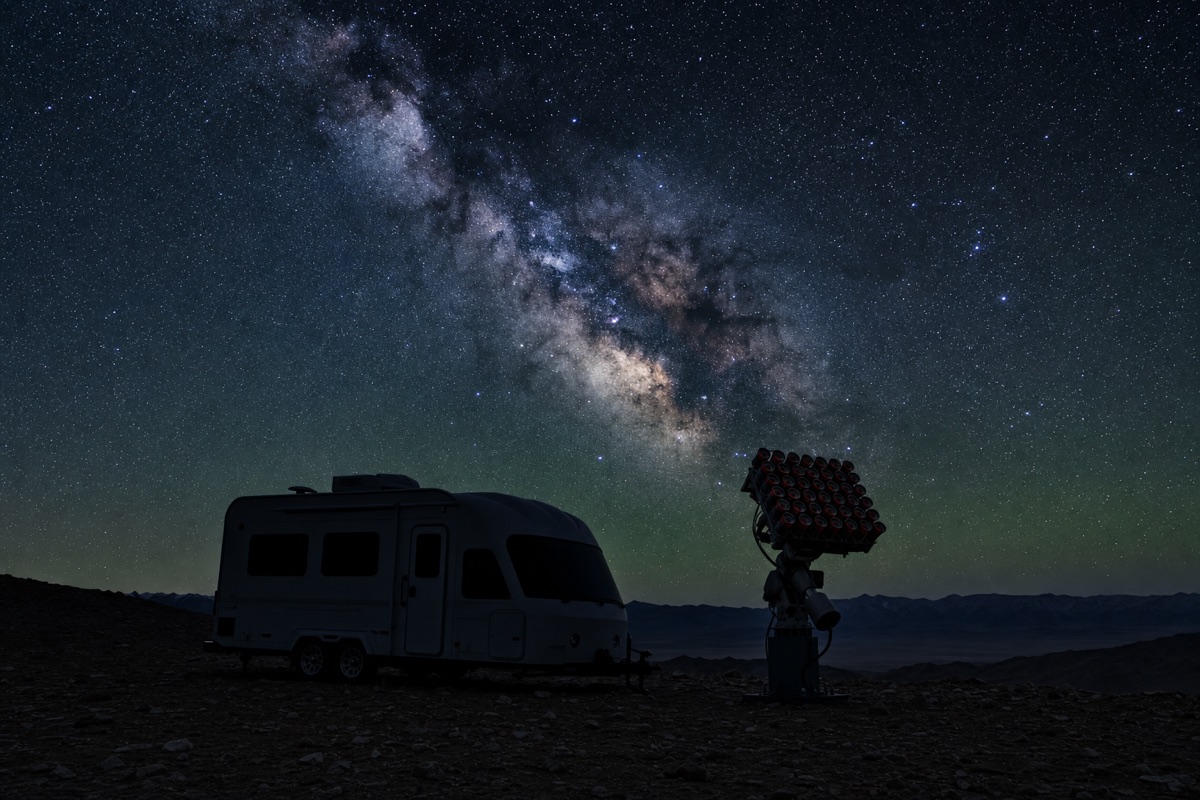
Lenghu dark-sky site vision concept
Vision concept · Lenghu dark-sky site, Qinghai · AI-generated (gpt-image-2), not a photograph
OPEN SOURCE · 开源

Open source is a commitment, delivered in stages

Licenses are fixed; release follows milestones — we don't wave "fully open source" as a slogan, we commit to a timetable. Each piece goes public when it reaches reproducible quality, not as a half-finished dump.

Site & design docs

CC BY-SA 4.0

Public now. Everything on this site, the technical trade-offs, the engineering Q&A — the source is the repo.

Hardware

CERN-OHL-W-2.0

Opens as the first nodes are finalized. Parametric CAD sources, BOM, adapter designs, printable STLs. OSHWA certification is a goal.

Software

Apache-2.0

Opens progressively with hardware validation. Capture, alignment, stacking, scheduling and the simulation system. Commercial use, modification, redistribution allowed.

Data

CC0

Published from first light onward. Raw frames, photometry tables, light curves — observation data is never sold, open forever.

JOIN · 参与

Three ways to join

Build one

Source the BOM, follow the guide — first nodes are in prototype validation; the assembly tutorial ships when the hardware is finalized.

See the BOM first

Write code

Stacking algorithms, scheduling and simulation, array control — contributors needed. Python / Rust / Android.

GitHub org

Use the data

Observation data is published under CC0 from first light — raw frames, photometry tables, light curves. Take it for your research.

See the simulated stream